
A well pump that is wrong for the well either never primes, runs dry every summer, or delivers a trickle at the top-floor shower. Most of those failures come down to one number people rarely measure: how far below the pump the water sits when the pump is actually running. Get that right and the choice between a shallow well pump on the surface and a submersible pump down the well usually makes itself.
This guide is for farms, estates, rural properties and the contractors who look after them. It covers how each type of well pump works, how to tell a shallow well from a deep one, what an electric well pump needs for power and controls, and how to size one on head and flow. The calculator part way down works out your total head and checks whether a surface pump can reach your water.
Quick answer: which well pump do I need?
- Water within about 7 m of the pump when pumping: a shallow well pump (surface-mounted jet or self-priming pump) with a foot valve works, and keeps the motor out of the well.
- Water deeper than about 7 m: you need a submersible well pump that pushes water up from below the water line.
- Narrow drilled borehole: a 3 or 4 inch borehole submersible sized to fit the bore.
- Every case: size on total head and flow at the duty point, and fit pressure control and dry-run protection.
What Is a Well Pump?
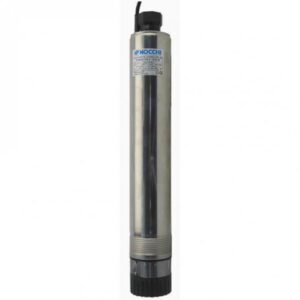
A well pump is an electric pump that lifts groundwater from a well and delivers it under pressure to taps, troughs, irrigation or a storage tank. It is what makes a private water supply usable on a property with no mains connection, or cuts mains use where a well already exists for gardens, livestock or washdown.
There are two broad families. Surface pumps sit above ground and draw water up a suction pipe. Submersible pumps sit below the water line and push water up a rising main. Which suits your well depends almost entirely on depth to water.
Well or borehole: what is the difference?
People use the terms interchangeably, but the construction differs. A traditional well is usually dug or augered, relatively wide and often lined with brick, stone or concrete rings. A borehole is drilled, narrow and lined with plastic or steel casing, commonly around 4 to 6 inches in diameter for a private supply.
A wide well accepts almost any submersible body or a surface pump’s suction pipe. A borehole limits you to slim pumps that fit the casing, which is why we cover it in its own well and borehole pump selection guide.
How Does a Well Pump Work?
Every electric well pump spins one or more impellers. What differs is where the pump sits relative to the water, which decides whether it pulls water up or pushes it.
Surface pumps pull water up by suction
A surface pump lowers the pressure in its suction pipe and atmospheric pressure pushes water up to fill it. Atmospheric pressure at sea level can only support a column of water about 10.3 m high, and that is the theoretical ceiling with a perfect vacuum. Real pumps lose some of that to pipe friction, the pump’s own inlet requirements and dissolved air, so the usable limit is around 7 to 8 m for clean, cold water at low altitude.
The limit falls as you go higher, by roughly 0.12 m for every 100 m of altitude, so a pump on a hill farm at 400 m has about half a metre less to work with. Our guide to pump suction lift and NPSH walks through the full calculation, and explains why pushing past the limit leads to cavitation damage.
Submersible pumps push water up
A submersible pump sits under the water, so it never has to lift by suction. Its stacked impellers (the stages in a multistage pump) each add pressure, and the pump pushes water up the rising main. Depth is then limited only by the head the pump can generate, which is why submersibles are the standard answer for deep wells.
The pressure vessel and controls
A pump cannot tell when someone opens a tap, so a domestic or commercial well system needs either a pressure vessel with a pressure switch, or an electronic pressure and flow controller that starts the pump when pressure drops and stops it when demand ends. Some automatic well pumps have this built in. Without it, the pump either runs constantly or short-cycles, both of which shorten its life.
Do You Have a Shallow or Deep Well?
For pump selection, “shallow” and “deep” are not about how far down the well goes. They describe how far below the pump the water surface sits while the pump is running. A 15 m well with water standing 3 m below ground is a shallow well for pumping purposes.
Static level, pumping level and drawdown
Three measurements tell you what you are working with:
- Total depth: ground level to the bottom of the well. This sets how low a submersible can hang while staying clear of silt.
- Static water level: ground level to the water surface after the well has rested, ideally overnight.
- Pumping water level: the level once the pump has run for a while at your intended flow. The difference from static is the drawdown, and this is the figure to size on.
Measure levels with a weighted tape or dip meter, or check the driller’s log if one exists. Measure in late summer or early autumn if you can, when groundwater is usually lowest: a well comfortably inside the suction limit in March may not be in September.
What Type of Well Pump Do I Need?
With the pumping level known, the choice comes down to four main types of well pump. Work through the decision tree first, then read the section for the type it points to.
Do you want the pump out of the water, for easy access or a narrow or shared well?
Is the source a narrow drilled borehole, typically 3 to 6 inches?
Shallow well pumps (surface and above ground well pumps)
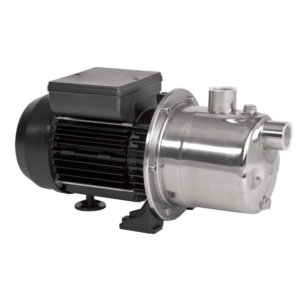
A shallow well pump is a surface-mounted pump, usually a jet pump or self-priming centrifugal pump, installed above ground in a pump house, outbuilding or kiosk next to the well. A single suction pipe runs down into the water, finished with a foot valve and strainer that stop the pipe draining back when the pump stops.
Jet pumps use a built-in venturi (the ejector) to help pull water up, which makes them good at re-priming and tolerant of small amounts of air. Our self-priming pumps and wider range of surface-mounted pumps both include models suited to shallow wells and tanks, and the self-priming pumps guide explains how the priming chamber works.
An above ground well pump makes sense when:
- The pumping level stays well inside the suction limit all year.
- You want to service the pump without lifting anything out of the well.
- The well is too narrow, too silted or too awkward for a submersible body and cable.
The trade-offs are noise, frost exposure and priming. Every joint on the suction side must be airtight, because one small leak lets air in and the pump loses prime. If you are commissioning one, follow our step-by-step guide on how to prime a pump.
Deep well jet pumps
A deep-well (twin-pipe) jet pump moves the ejector down into the well. The surface pump sends part of its output down one pipe to drive the ejector, which lifts water up the second pipe. This beats the suction limit while keeping the motor above ground, but part of the flow is always recirculating to drive the ejector, so it is less efficient than a submersible. For most new installations, a submersible is the better buy.
Submersible well pumps
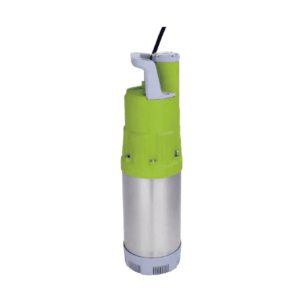
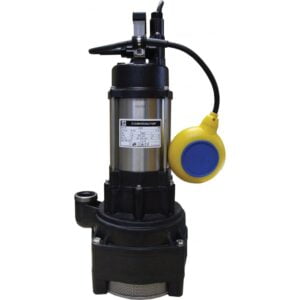
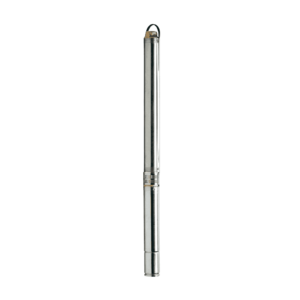
Submersible well pumps are sealed, multistage units that hang below the pumping level on the rising main, with a stainless steel safety rope taking the weight. Because they push rather than pull, they cope with deep wells, never lose prime and run quietly. For wide dug wells, compact multistage units such as the Well Buddy range are a common choice; for narrow bores, slim 3 and 4 inch borehole pumps are the only option that fits.
The downside is access: servicing means lifting pump, pipe and cable out of the well, so choose a reliable model and protect it against running dry.
Types of well pumps compared
| Type | Where it sits | Depth to water | Strengths | Watch out for |
|---|---|---|---|---|
| Shallow well jet or self-priming pump | Above ground | Within about 7 m | Easy access, simple to replace | Priming, air leaks, frost, noise |
| Deep well jet pump | Above ground, ejector in well | Beyond the suction limit | Motor stays dry and accessible | Lower efficiency, two pipes to install |
| Submersible well pump | In the water | Limited only by pump head | No priming, quiet, efficient | Must be lifted out to service |
| Borehole submersible (3 or 4 inch) | In the borehole | Limited only by pump head | Fits narrow casings | Bore diameter, sand, dry running |
-
%27%20fill-opacity%3D%27.5%27%3E%3Cellipse%20fill%3D%22%23161616%22%20fill-opacity%3D%22.5%22%20rx%3D%221%22%20ry%3D%221%22%20transform%3D%22matrix(48.13886%201.37382%20-4.86726%20170.54992%20137.3%20215.7)%22%2F%3E%3Cellipse%20fill%3D%22%23fff%22%20fill-opacity%3D%22.5%22%20rx%3D%221%22%20ry%3D%221%22%20transform%3D%22matrix(-15.01428%20-298.4507%2054.55375%20-2.74446%20260.8%20158.6)%22%2F%3E%3Cellipse%20fill%3D%22%23fff%22%20fill-opacity%3D%22.5%22%20rx%3D%221%22%20ry%3D%221%22%20transform%3D%22matrix(41.57391%20-295.81377%2049.29282%206.92765%2030%20123.8)%22%2F%3E%3Cellipse%20fill%3D%22%23161616%22%20fill-opacity%3D%22.5%22%20rx%3D%221%22%20ry%3D%221%22%20transform%3D%22rotate(93.3%20-45%20182.4)%20scale(66.64696%2026.0712)%22%2F%3E%3C%2Fg%3E%3C%2Fsvg%3E) JS-530 Well Buddy Multi Stage Irrigation Pump – 110v Automatic – 011-532A£340.30 +VAT
JS-530 Well Buddy Multi Stage Irrigation Pump – 110v Automatic – 011-532A£340.30 +VAT -
JS-530 Well Buddy Multi Stage Irrigation Pump – 230v Automatic – 011-530A£340.30 +VAT
-
JS-530 Well Buddy Multi Stage Irrigation Pump – 230v Manual – 011-530£310.63 +VAT
-
JS-530 Well Buddy Multi Stage Irrigation PumpsFrom £310.63
-
%22%20transform%3D%22translate(.6%20.6)%20scale(1.17188)%22%20fill-opacity%3D%22.5%22%3E%3Cellipse%20fill%3D%22%23c9c9c9%22%20rx%3D%221%22%20ry%3D%221%22%20transform%3D%22matrix(.1779%2098.8061%20-21.63983%20.03896%20130%20124.6)%22%2F%3E%3Cellipse%20fill%3D%22%23dbdbdb%22%20cx%3D%22125%22%20cy%3D%2264%22%20rx%3D%2224%22%20ry%3D%2234%22%2F%3E%3Cpath%20fill%3D%22%23fff%22%20d%3D%22M0%20211h256v45H0z%22%2F%3E%3Cellipse%20fill%3D%22%23fff%22%20cx%3D%2248%22%20cy%3D%22160%22%20rx%3D%2258%22%20ry%3D%22255%22%2F%3E%3C%2Fg%3E%3C%2Fsvg%3E) Pentax 3S 3-45 3-Inch 230v Multistage Borehole Pump – 022-926£704.62 +VAT
Pentax 3S 3-45 3-Inch 230v Multistage Borehole Pump – 022-926£704.62 +VAT -
Pentax 3S 3-30 3-Inch 230v Multistage Borehole Pump – 022-924£636.31 +VAT
-
Pentax 3S 3-23 3-Inch 230v Multistage Borehole Pump – 022-922£565.93 +VAT
-
Pentax 3S 3-15 3-Inch 230v Multistage Borehole Pump – 022-920£458.29 +VAT
-
Pentax 3S 3-Inch 230v Multistage Borehole PumpsFrom £458.29
Electric Well Pumps: Power Supply and Controls
Almost every modern well pump is an electric well pump, and the electrical side causes as many problems as the hydraulics. Check these points before you buy.
Voltage and phase
Most domestic and small agricultural well pumps run on 230 V single phase. Larger pumps on farms and estates are often 400 V three phase, which suits higher power and needs external motor protection. Some site and irrigation models are made in 110 V for use with site transformers. Match the pump to the supply you actually have at the well, not at the house.
Cable length and electrical protection
Submersible pumps come with a fixed length of cable, commonly 15 or 20 m. If the pump will hang deeper than that, or the controls are some distance away, the cable must be extended with a proper submersible joint and sized for the run so the motor does not suffer voltage drop. Outdoor pump circuits should be installed by a qualified electrician to BS 7671, with RCD protection.
Automatic or manual
“Automatic” well pumps include their own control, typically a pressure switch or float switch, so they start and stop on demand. Manual versions run whenever power is applied and need separate controls. For a house supply you want automatic operation plus a pressure vessel; for filling a tank, a float switch on the tank is often simpler. Our pump controls range covers both.
How to Size a Well Pump
Sizing a well pump means finding a model that delivers the flow you need at the total head of your system. Both numbers matter together: a pump’s maximum head is only reached at zero flow, and its maximum flow only at zero head. The working point sits somewhere on the curve between them, which is why our guide to pump head and flow rate is worth a read before you compare models.
Step 1: Work out daily demand
Daily demand tells you whether the well can keep up and whether licensing applies. Water UK and Waterwise put average use at about 142 litres per person per day, so a household of four uses around 570 litres a day. Add livestock, garden irrigation and washdown on top. For comparison, the Environment Agency threshold for needing a full abstraction licence is 20 cubic metres (20,000 litres) a day.
Step 2: Decide the flow rate at the tap
Flow, in litres per minute, is set by how many outlets run at once rather than by daily volume. A cottage with one bathroom needs far less than a farmhouse running a shower, washing machine and yard hose together. Count the outlets likely to run at once, add any irrigation or trough line, and never ask for more than the well can yield.
Step 3: Calculate total head
Total head (often called total dynamic head) is the pressure the pump must produce, expressed in metres of water. It has four parts:
- Lift from water: the pumping water level below ground.
- Rise above ground: the height of the highest outlet above the well head.
- Friction loss: the head lost pushing water through the pipe, which grows with length and flow and falls sharply with bigger bore. Our discharge pipe sizing guide covers this in detail.
- Pressure at the outlet: the working pressure you want, where 1 bar equals about 10.2 m of head.
Well pump calculator: total head, suction check and daily demand
| Lift from pumping water level | |
| Rise to highest outlet | |
| Pipe friction (straight pipe, Hazen-Williams, C = 140) | |
| Outlet pressure as head | |
| Total head at your duty point | |
| Flow in the pipe | |
| Water velocity in the pipe | |
| Estimated daily demand |