
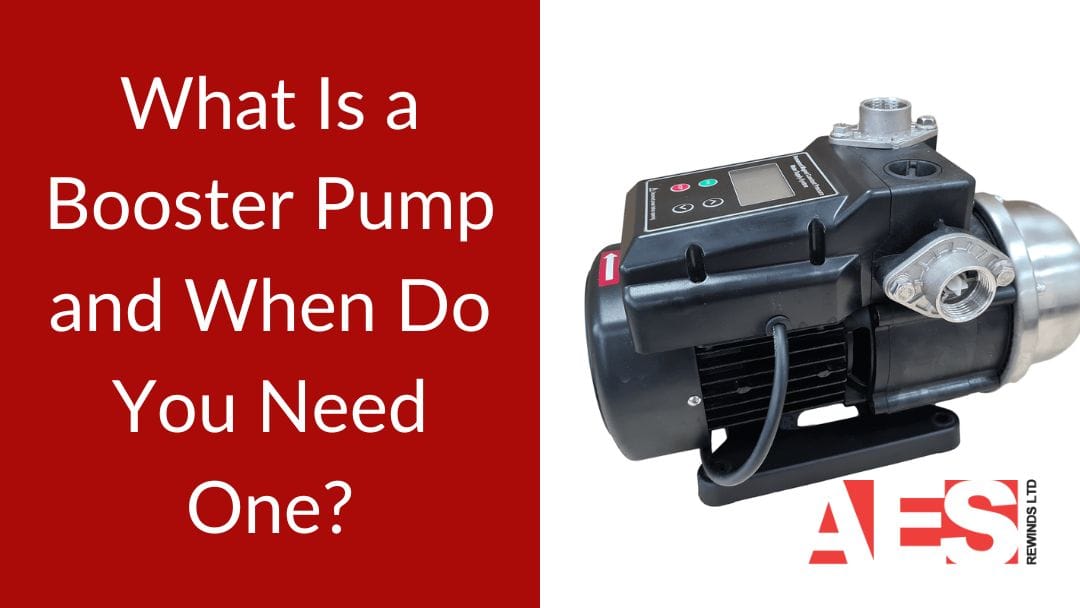
A booster pump is a pump that takes water at low pressure and delivers it at a higher, steady pressure to taps, showers, appliances and equipment. It is the standard fix when the mains, a storage tank or a well cannot supply enough pressure on its own, whether that is a top-floor shower in a house or every floor of an office block.
This guide explains what a booster pump is, how it works, the main types used in the UK, and how to tell whether you need one or have a different problem. It also covers the rules and safety points that apply before you fit one. It is written for facilities managers, contractors and property owners; if you already know you need a pump and want to size it, go straight to our guide to choosing the right booster pump.
What Is a Booster Pump?
A booster pump is usually a centrifugal pump with a motor, an impeller and a control that starts and stops it on demand. It sits between the water source and the outlets. Water arrives at whatever pressure the source can provide, and the pump adds the extra pressure needed so that outlets further away or higher up still get a usable flow.
The term covers a wide range of equipment, from a compact automatic pump serving a single bathroom to a packaged set of several pumps supplying a whole building. What they have in common is the job: raising pressure, not moving water from one place to another. That distinguishes them from drainage, sump or transfer pumps.
How Does a Booster Pump Work?
When a tap opens, the pressure in the pipework drops. A pressure switch, flow switch or electronic controller senses that drop and starts the pump. The spinning impeller adds energy to the water and raises its pressure until demand stops, then the control switches the pump off. The diagram shows the main parts of a typical installation.
The Parts That Matter
Three parts decide how well a booster pump performs in practice:
- The control. A simple pressure switch starts and stops the pump between two set points. An electronic controller such as the Watertech Controlpress adds dry-run protection and automatic restart. A variable speed drive holds a constant pressure by changing the pump speed.
- The pressure vessel. A small charged vessel stores pressurised water, so a dripping tap or a single WC refill does not start the pump every few seconds.
- The non-return valve. It holds pressure in the system when the pump stops and stops water flowing back to the source.
Types of Booster Pump
Booster pumps are grouped in a few overlapping ways. These are the distinctions that matter most when you are working out what you need.
| Type | What it means | Typical use |
|---|---|---|
| Single-stage | One impeller; moderate pressure, good flow | Houses, small buildings, irrigation |
| Multistage | Several impellers in series; each adds pressure | Taller buildings, high-pressure duties |
| Fixed speed | Runs flat out, switched on and off by pressure | Simple, steady demand |
| Variable speed | Speed changes to hold a constant pressure | Varying demand, quieter running, lower energy |
| Packaged booster set | One or more pumps, controls and vessel on one base | Commercial and multi-storey buildings |
Single-stage and multistage pumps, and fixed and variable speed control, are compared in detail in our guide to choosing a booster pump, which also includes a sizing calculator.
Positive Head and Negative Head Pumps
In UK homes with a cold water tank in the loft, booster and shower pumps are described as positive head or negative head. A positive head pump serves outlets below the tank: when a tap opens, water starts to flow by gravity and that flow starts the pump. A negative head pump serves outlets level with or above the tank, such as a shower in a loft conversion, where there is no gravity flow to trigger it, so it needs a pressure switch to start. Fitting a positive head pump in a negative head position is a common reason a new pump will not start.
Booster Pumps vs Booster Sets
A single booster pump suits one property or a small building. A booster set combines two or more pumps on a common base with a controller that alternates them and covers a failure, and it usually draws from a break tank. Booster sets are the norm for blocks of flats, offices, hotels and hospitals. Our guide to cold water booster sets for multi-storey buildings covers how they are sized and laid out.
Where Booster Pumps Are Used
Booster pumps turn up anywhere the available pressure falls short of what the outlets need:
- Gravity-fed houses, where the height between the loft tank and the shower head gives very little pressure.
- Upper floors and long pipe runs, where height and friction use up the mains pressure.
- Commercial buildings such as offices, hotels and care homes, where many outlets run at once.
- Properties on wells, boreholes or rainwater tanks, where the water has to be pressurised from stored supply.
- Irrigation and washdown, where sprinklers, spray bars and hoses need a set pressure to work properly.
On a much larger scale, water companies run booster stations on their networks to lift water to high ground or distant areas. These work on the same principle but are part of the public supply rather than something fitted in a building.
Do You Need a Booster Pump?
The usual signs are weak showers on upper floors, slow-filling baths and cisterns, appliances that take too long to fill, and pressure that collapses when two outlets run together. Before buying a pump, though, it is worth ruling out the cheaper causes. A partly closed stop tap, a failed pressure reducing valve, a blocked strainer or a leak can all look like low supply pressure. Our guide to testing water pressure and flow rate shows how to find out where the pressure is being lost.
How Much Pressure Does a Gravity System Give?
In a gravity-fed system, the pressure at an outlet depends only on how far it sits below the water level in the tank: roughly 0.1 bar for every metre. Many showers and appliances need far more than a loft tank can provide, which is why gravity systems are the most common reason for fitting a booster pump in a house. Use the calculator below to check yours.
Gravity pressure calculator
Measure from the water level in the tank down to the outlet (for a shower, the shower head).
Static pressure only: friction in the pipework reduces it further while water is flowing. Check the minimum pressure in the instructions for your shower or appliance.
Booster Pump Rules and Safety
Booster pumps are legal in the UK, but they are covered by the Water Supply (Water Fittings) Regulations 1999, and a badly installed one can affect the public supply as well as the building.
Notification and Break Tanks
You must notify your water supplier before installing a pump or booster that draws more than 12 litres per minute, whether it is connected directly or indirectly to the supply pipe. Larger pumps normally draw from a break tank filled from the mains through an air gap, which protects the public supply from backflow and stops the pump pulling down pressure for neighbouring properties. Fittings in contact with drinking water must also be suitable for that use; WRAS approval is the usual way to show it.
Protecting the Pump and the System
The most common booster pump failures are avoidable. Fit dry-run protection, so the pump stops if the tank empties or the supply fails rather than destroying its mechanical seal. Keep the pressure vessel charged to the right level, or the pump will cycle rapidly and wear out. Check that the pressure delivered does not exceed what the fittings and appliances are rated for, especially on lower floors. Electrical work should be done by a qualified electrician, with the pump on a suitably protected circuit.
Recommended Booster Pumps from AES Rewinds
Looking for a booster pump? At AES Rewinds, we stock booster pumps and controls for domestic, commercial and light industrial use.
Browse our full range:
- Booster pumps for raising pressure in buildings
- Nocchi DHI multistage pumps for higher pressures
- VSD Buddy APM203 variable speed booster pump
- Pump controls, including electronic pressure controllers
Our team can help you decide whether a booster pump is the right fix and which type suits your building. Contact us for expert advice.
Frequently Asked Questions
What does a booster pump do?
It raises the pressure of water from the mains, a tank or a well so that taps, showers and appliances get enough pressure and flow, especially on upper floors or at the end of long pipe runs.
How does a cold water booster set work?
The mains fills a break tank, and two or more pumps draw from it. A pressure sensor tells the controller when demand rises, and the controller starts or speeds up the pumps to hold a set pressure, alternating them to share wear and switching to the standby pump if one fails.
Is a booster pump the same as a shower pump?
A shower pump is a booster pump dedicated to one shower, usually on a gravity-fed hot and cold supply. A whole-house or building booster pump serves many outlets. Both work on the same principle.
Can I fit a booster pump directly to the mains?
Small pumps can be, but you must notify the water supplier before fitting any pump that draws more than 12 litres per minute, and larger systems normally pump from a break tank instead. Check with your water supplier before buying.
Are booster pumps noisy?
Pumps make some noise when running, and fixed speed pumps that cycle on and off are the most noticeable. Variable speed pumps are generally quieter, and anti-vibration mounts and flexible connections stop noise travelling through the pipework.
Will a booster pump fix low pressure caused by a leak or a blocked pipe?
No. A pump adds pressure but cannot make up for water lost through a leak or flow restricted by a closed valve or blockage. Find and fix those first; our guide to low water pressure in commercial buildings sets out a diagnosis sequence.
Key Takeaways
- A booster pump raises water pressure from the mains, a tank or a well; it does not move water from one place to another.
- A control starts the pump when pressure drops, a vessel prevents rapid cycling, and a non-return valve holds pressure when it stops.
- Gravity systems give only about 0.1 bar per metre of height, which is why they are the most common reason for boosting a house.
- Notify your water supplier before fitting a pump drawing over 12 litres per minute; larger systems pump from a break tank.
- Rule out valves, blockages and leaks before buying a pump.
Related Articles
- How to Choose the Right Booster Pump: sizing, speed control and pump sets.
- Cold Water Booster Sets for Multi-Storey Buildings: break tanks, duty points and pressure zones.
- How to Increase Water Pressure in Your Home: fixes to try before and after boosting.
- How to Test Water Pressure and Flow Rate: measuring the problem properly.
- Understanding Pump Head and Flow Rate: the two numbers behind every pump choice.