
Well and Borehole Pumps
Our borehole pumps and well pumps lift clean water from boreholes, wells, springs and storage tanks for homes, farms, holiday lets and commercial sites on a private supply. The range covers narrow 3″ bores up to 5″ bores, plus wider pumps for hand-dug wells and tanks.
Measure the bore and the depth to water before you choose. Our guide to selecting a well and borehole pump explains how, or ask our team.
Showing all 6 results

100 to 110 l/min · 45 m · 230v
The Well Buddy range is a pair of lightweight plastic multistage submersible pumps for moving clean water at high ...Read More£133.30 +VAT
47 to 87 m max head · 230v
The Matra Venus is a 4-inch submersible borehole pump for clean water, built for jobs that need high pressure ...Read More£248.53 +VAT
50 to 90 l/min · 45 to 56 m · 230v
The Pentair Dominator 4″ well pump is a 230v single-phase multistage submersible pump for clean water in 4-inch wells ...Read More£532.81 +VAT
60 to 140 l/min · 47 to 63 m · 230v
The Pentair Dominator 5″ well pump is a stainless steel multistage submersible pump for lifting clean water from wells, ...Read More£541.78 +VAT
46 to 128 m max head · 230v / 400v
Pentax 3S pumps are 3-inch multistage borehole pumps for narrow wells and boreholes where a 4-inch pump will not ...Read More£458.29 +VAT
140 l/min · 45 m · 110v / 230v
The JS-530 Well Buddy is a heavy duty multistage submersible pump from JS Pumps for moving clean water at ...Read More£310.63 +VAT



How to choose a borehole pump
Four measurements decide which pump will fit and perform:
- Bore diameter: measure the internal diameter of the borehole lining. A 3″ bore needs a 3″ pump, because a 4″ pump will not go down it.
- Depth to water and drawdown: the level drops once pumping starts, so the pump must sit below the lowest pumping level.
- Total head: lift from the pumping water level to the highest point of use, plus pipe friction and the pressure wanted at the taps.
- Flow: what you need, within what the borehole can yield (see the driller’s records).
Our guide to pump head and flow rate has worked examples.
Well and borehole pumps we stock
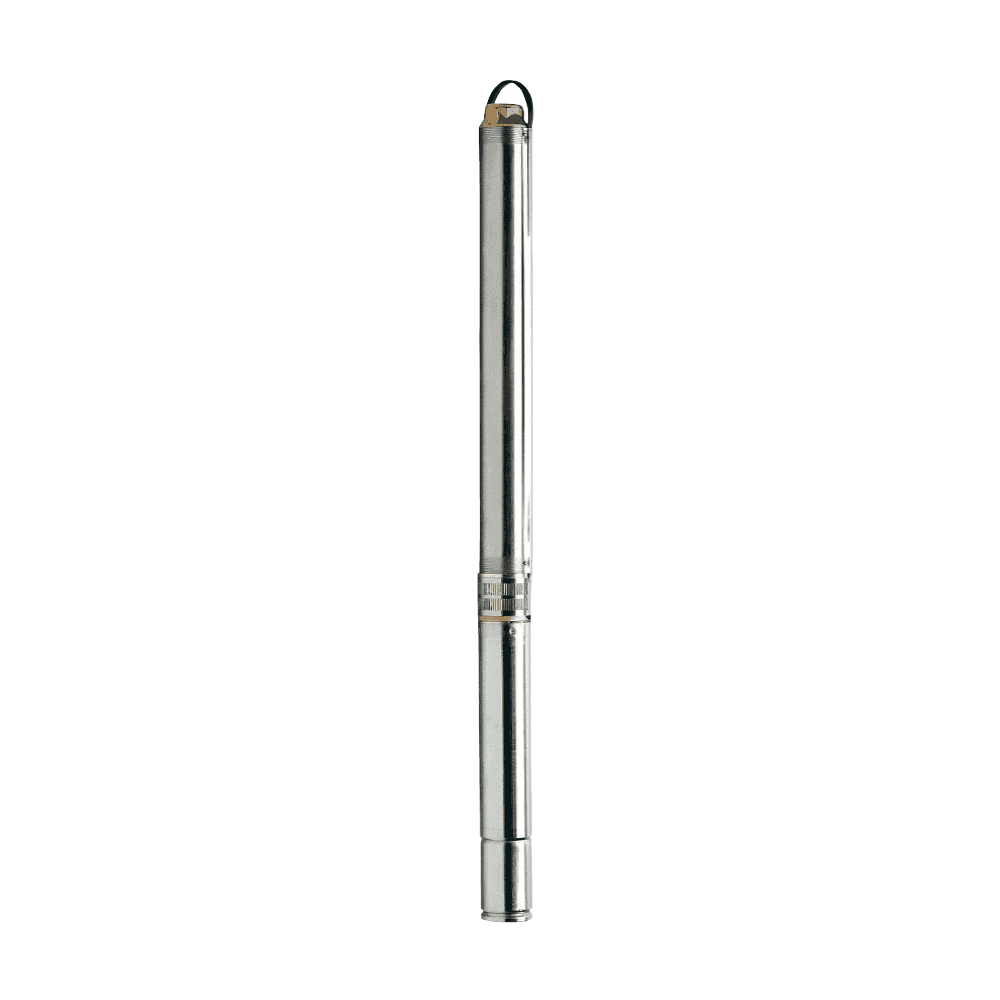
For 3″ boreholes, the Pentax 3S multistage borehole pumps have a stainless steel shell and shaft, Noryl impellers and flows of up to 45 litres per minute. Four models give maximum heads from 46 to 128 metres. Three run on 230v single phase and the largest on 400v three phase.
For 4″ and 5″ bores, choose from the Pentair Dominator 4″ well pumps and Pentair Dominator 5″ well pumps, both 230v, and the Matra Venus borehole pumps.
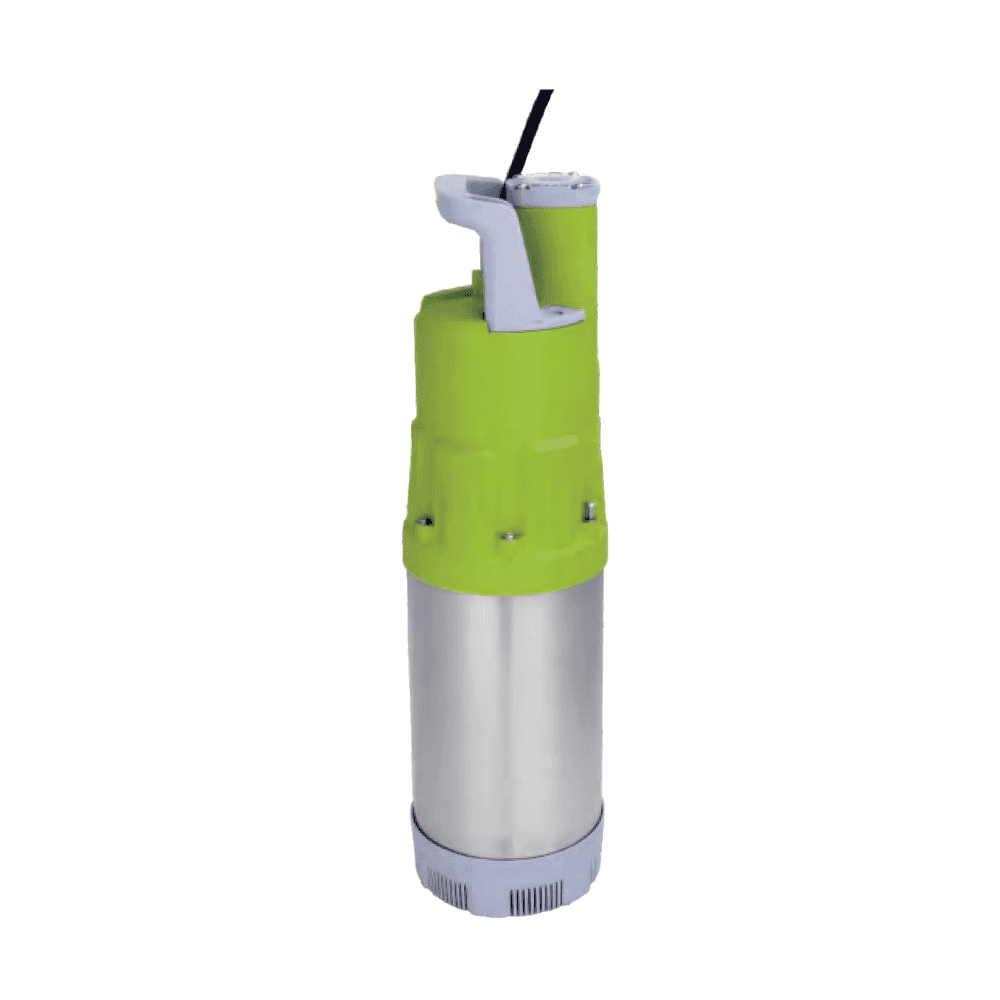
For wells, springs and tanks, the Well Buddy is a 230v multistage submersible about 150mm wide, too wide for most 4″ or 5″ bores. The 1000A has a float switch and the 1000P has built-in pressure control and a non-return valve. The JS-530 Well Buddy is a separate design with a 1.3kW motor, up to 140 litres per minute and a 110v option.
Dry running, controls and pressure
A borehole pump that runs dry is quickly damaged, and most have no protection built in. Fit level probes or a control unit that switches the pump off when the water falls; see our pump controls. Wire it through a panel with an isolator and overload protection rated to the motor.
To supply a house, add a pressure vessel or controller at the surface. In a bore much wider than the pump, fit a cooling sleeve so water flows past the motor.
Sand wears impellers: the Pentax 3S is rated for no more than 40 g/m³, so pump a new borehole until it runs clear before fitting the permanent pump.
Related applications
For farm troughs, glasshouses and sports pitches, see our irrigation pumps. For a surface pump drawing from a shallow well, read our self-priming pumps guide and the notes on suction lift, because a surface pump cannot lift water from much deeper than about 8 metres.
Frequently asked questions
What is the difference between a well pump and a borehole pump?
A borehole pump is a slim submersible built to fit a narrow drilled bore, usually 3″, 4″ or 5″ in diameter. “Well pump” often means the same thing, but also covers pumps for wider hand-dug wells, springs and tanks, such as the Well Buddy.
What size borehole pump do I need?
Size it from three figures: the internal diameter of the bore, the total head from the pumping water level to the point of use, and the flow you need within the borehole’s yield. Our guide to choosing the right well pump walks through each step.
How deep should a borehole pump be set?
Below the lowest water level you expect while pumping, allowing for drawdown, and clear of the bottom of the bore where silt settles. The driller’s records or a pump test will show the drawdown. Fit dry-run protection as a backstop.
Do I need to prime a submersible borehole pump?
A submersible pump sits below the water, so it fills itself, but trapped air can still cause problems on first start. Our guide on how to prime a submersible pump explains what to check before you switch on.
Do I need a licence to take water from a borehole?
In England, taking more than 20 cubic metres (20,000 litres) a day is likely to need an abstraction licence from the Environment Agency, and smaller abstractions are usually exempt. Check the gov.uk abstraction licence guidance before you size the pump. Wales, Scotland and Northern Ireland have separate rules.
Can a borehole pump supply a house directly?
Yes, with controls at the surface. A pressure vessel or electronic pressure controller starts and stops the pump with demand and keeps pressure steady at the taps. If the water is for drinking, have it tested, because private water supplies are overseen by the local council.
Free, independent advice
Need help choosing? Ask our team
Not sure it is the right pump or motor for the job? Send us a question and our team will reply, or call us now. We have been supplying, repairing and rewinding pumps since 1948.
Monday to Friday, 8.30am to 5.30pm
Send us a question
We reply within one working day.