
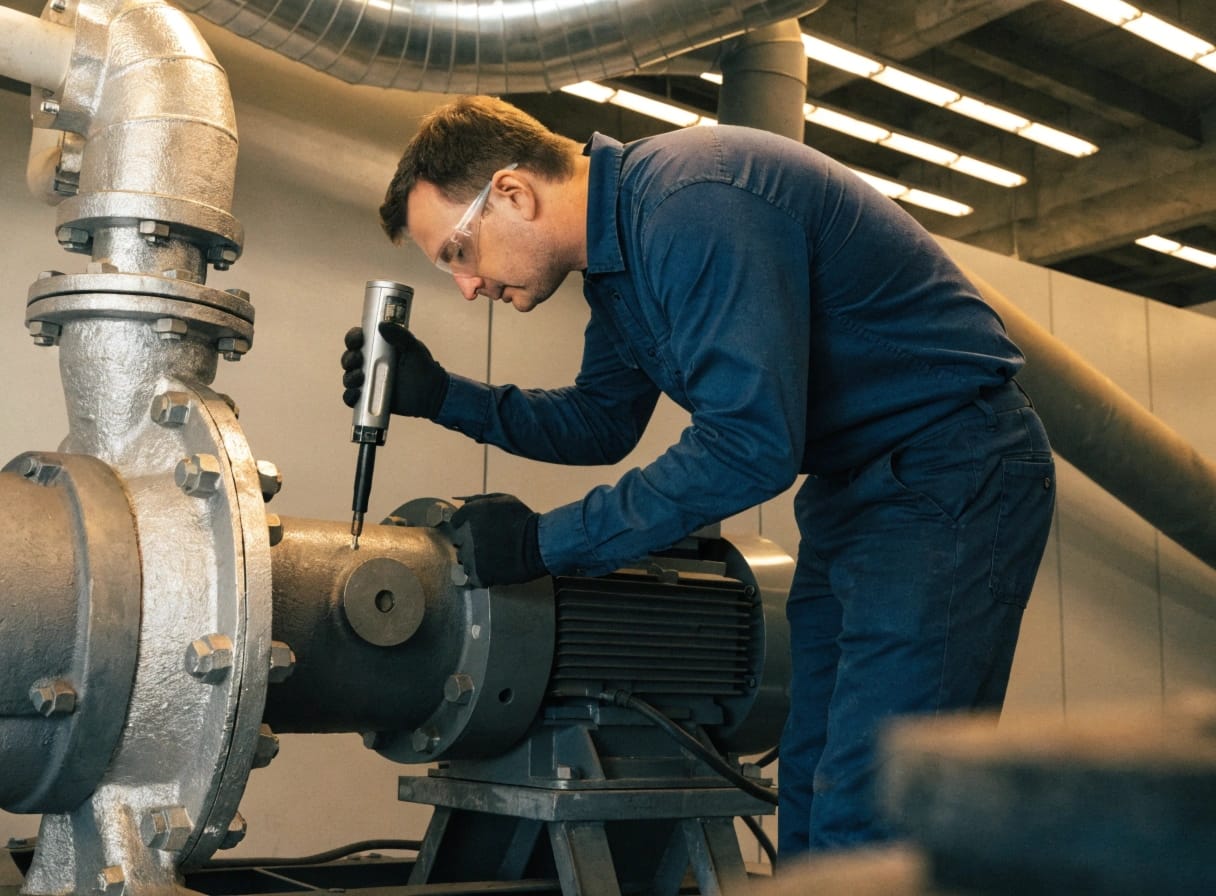
If your pump has started sounding like it is pumping gravel instead of water, you are not imagining it. That grinding, rattling noise is often the first audible sign of pump cavitation, one of the most common causes of premature pump failure in industrial and commercial systems. Left unaddressed, cavitation pits impellers, wears out seals, and can turn a routine maintenance job into an unplanned full pump replacement.
This guide explains what pump cavitation actually is, why it happens, how to recognise it before serious damage sets in, and the practical steps that prevent it. Whether you are troubleshooting an existing installation or specifying a new pump for a demanding duty, understanding cavitation is essential to keeping your system reliable and your maintenance budget under control.
What Is Pump Cavitation?
Pump cavitation occurs when the pressure inside a pump drops low enough for the liquid being pumped to vaporise, forming small vapour bubbles. As those bubbles move from the low-pressure suction side into the higher-pressure zone near the impeller, they collapse almost instantly. Each collapse releases a tiny, intensely concentrated shockwave. On its own, one bubble collapsing is harmless. A pump cavitating in normal operation produces thousands of these implosions every second, and over time that repeated hammering erodes metal surfaces, damages seals, and destroys bearings.
This is not the same as air simply getting into a pump, although the symptoms can look similar. True cavitation is a phase change: the liquid itself boils locally because the pressure has fallen below its vapour pressure at that temperature, not because air has leaked in from outside. We will come back to why that distinction matters when diagnosing the problem.
Why the Impeller Eye Is the Danger Zone
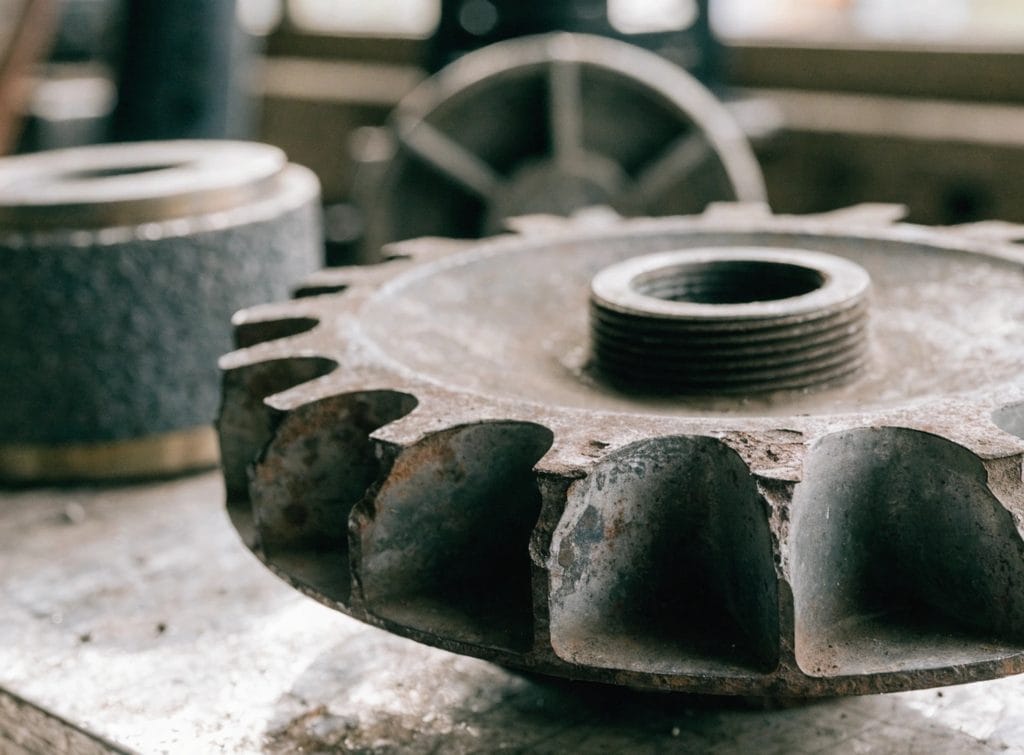
In a centrifugal pump, fluid pressure is at its lowest right at the eye of the impeller, the point where liquid enters and is first accelerated outward. Fluid has to speed up rapidly at this point, and pressure drops as velocity increases. If the pressure here falls below the liquid’s vapour pressure, bubbles form immediately. As the fluid moves further into the impeller vanes and pressure recovers, those bubbles collapse violently against the blade surfaces. This is why cavitation damage is almost always concentrated near the leading edge of the impeller vanes rather than spread evenly through the pump.
What Causes Pump Cavitation
Cavitation has several distinct causes, and correctly identifying which one applies to your system is the difference between a five-minute fix and an expensive re-engineering job. The two broad categories are suction cavitation, where the pump is starved of adequate inlet pressure, and discharge cavitation, where the pump is forced to operate far from its intended duty point.
Insufficient NPSH Available
The single most common cause of suction cavitation is inadequate Net Positive Suction Head, usually written as NPSH. This is the industry’s way of quantifying how much suction-side pressure margin exists above the liquid’s vapour pressure. Every pump has a published NPSH requirement (NPSHr) from its manufacturer, and every installation has an available NPSH (NPSHa) determined by the system design. Cavitation begins the moment NPSHa drops below NPSHr. We cover the calculation in detail, with a working calculator, further down this guide. For a broader look at how suction-side conditions affect pump performance generally, see our guide to pump suction lift and NPSH requirements.
Excessive Suction Lift or Long Suction Runs
Any pump mounted above the liquid level it is drawing from has to lift that liquid against gravity before it even reaches the impeller. The higher the lift, or the longer and more restrictive the suction pipework, the more NPSHa is consumed before the fluid arrives at the pump. Sharp bends, undersized suction pipe, foot valves, and strainers all add friction losses that eat directly into your available margin.
High Liquid Temperature
Vapour pressure rises sharply with temperature. Water at 20°C has a vapour pressure of roughly 2.3 kPa, but at 60°C that climbs to around 20 kPa, nearly a tenfold increase. A pump that runs perfectly well on cold mains water can start cavitating on the same duty if the liquid temperature rises, which is a common problem in cooling tower circuits, condensate systems, and hot process water applications.
Operating Far From the Best Efficiency Point
Discharge cavitation, sometimes called recirculation cavitation, happens when a pump runs well below its minimum continuous stable flow, often because a downstream valve is throttled too far or the system demand has dropped. At very low flow, fluid recirculates internally within the pump casing rather than moving cleanly through it, creating localised low-pressure pockets at the impeller tips. This is a common issue in duty and standby arrangements where one pump ends up carrying a much lighter load than it was sized for.
Air Ingress and Vortexing
Air drawn into the suction line through a leaking joint, a loose gasket, or a poorly submerged suction pipe behaves similarly to cavitation in terms of noise and vibration, though the underlying mechanism is different. A sump or wet well with insufficient liquid depth above the suction inlet can form a vortex that pulls air directly into the pump. This is a frequent cause of nuisance cavitation-like symptoms in sump and drainage applications, and it is often solved with something as simple as a vortex breaker or an adjustment to the float switch settings.
| Cause | Category | Typical fix |
|---|---|---|
| Low NPSHa relative to NPSHr | Suction cavitation | Reduce suction lift, upsize suction pipe, lower liquid temperature |
| Long or restrictive suction pipework | Suction cavitation | Shorten runs, remove unnecessary fittings, increase pipe diameter |
| Elevated liquid temperature | Suction cavitation | Cool the fluid, increase static submergence, re-select the pump |
| Running below minimum stable flow | Discharge cavitation | Open a bypass line, re-size for actual duty, avoid excessive throttling |
| Air ingress or vortexing at suction | Air entrainment (cavitation-like) | Seal suction joints, fit a vortex breaker, check submergence depth |
Warning Signs of Pump Cavitation
Cavitation rarely announces itself with a single dramatic failure. It tends to build gradually, and the earlier you catch it, the less damage accumulates. Facilities managers and maintenance teams who know what to listen and look for can often intervene weeks before a pump would otherwise fail outright.
Unusual Noise
The classic symptom is a rattling, crackling sound, often described as gravel or marbles moving through the pump casing. This noise is the audible signature of thousands of vapour bubbles collapsing against internal surfaces every second. It is usually most noticeable at the pump volute and tends to fluctuate with flow rate rather than staying perfectly constant, which helps distinguish it from a steady bearing fault.
Excessive Vibration
Cavitation creates uneven hydraulic forces on the impeller as vapour pockets form and collapse asymmetrically. This shows up as vibration that a handheld meter or a fitted vibration sensor will pick up well before it becomes noticeable by touch. Persistent vibration also accelerates bearing wear, so a cavitating pump often fails at the bearings before the impeller damage becomes severe enough to affect performance on its own.
Drop in Flow Rate or Discharge Pressure
As vapour bubbles form and collapse within the pump, they interfere with the smooth transfer of energy from impeller to fluid. The practical result is a pump that cannot deliver its rated flow or head even though it appears to be running normally. If you are seeing performance fall away from the figures on the pump curve for head and flow rate, cavitation should be on your checklist of likely causes.
Fluctuating Power Draw
Because cavitation disrupts consistent fluid flow through the pump, motor load can fluctuate noticeably rather than sitting at a steady current draw. This is a useful early indicator on pumps with motor monitoring or VFDs already installed, since the pattern often shows up in trend data before anyone notices the noise.
Physical Pitting on Inspection
By the time cavitation is visible on the impeller, it has usually been occurring for some time. Pitting typically appears as a rough, sponge-like texture concentrated near the leading edge of the vanes, sometimes with visible craters where material has been eroded away. Seals and wear rings can show similar damage. If you find this on inspection, it is worth reviewing the whole suction-side design rather than simply replacing the impeller and expecting a different outcome.
⚠️ Important: A pump can lose several per cent of its hydraulic efficiency to cavitation before any physical damage is visible on inspection. Noise and vibration are early warnings; do not wait for pitting to appear before investigating.
Understanding NPSH: The Core of Cavitation Prevention
Almost every suction cavitation problem comes down to one relationship: NPSH available must exceed NPSH required, with a safe margin. Getting comfortable with this calculation is the single most useful thing a facilities manager or contractor can do to avoid cavitation at the specification stage, rather than discovering it after installation.
NPSHa vs NPSHr
NPSH available (NPSHa) is a property of your system: the atmospheric or tank pressure at the liquid surface, plus or minus the static height between that surface and the pump, minus friction losses in the suction pipework, minus the liquid’s vapour pressure at its operating temperature. NPSH required (NPSHr) is a property of the pump itself, published by the manufacturer on the pump curve, and represents the minimum suction pressure margin that specific pump needs at a given flow rate to avoid a measurable drop in performance.
| Variable | Description | Typical value (cold water, sea level) |
|---|---|---|
| Atmospheric pressure head | Pressure at the open liquid surface | 10.33 m |
| Static suction head/lift | Height difference between liquid surface and pump centreline | Site-specific |
| Friction losses | Losses through suction pipe, fittings and strainers | Site-specific |
| Vapour pressure head | Vapour pressure of the liquid at operating temperature | 0.24 m at 20°C |
What Margin Is Safe?
Industry guidance under ANSI/HI 9.6.1 recommends keeping NPSHa at least 0.6 m or 10% above NPSHr, whichever figure is larger, for most general applications. Critical or continuous-duty installations, particularly where sealless pumps or high-energy pumps are involved, often warrant a larger margin. As a working rule, treat 0.5 to 1 m of margin as an absolute minimum for straightforward water applications, and widen that margin for hot liquids, long suction runs, or pumps that will run for extended periods without close monitoring.
NPSH Margin Calculator
Use the calculator below to check your own installation. Enter your suction conditions and the pump’s published NPSHr to see your available margin.
NPSH Margin Calculator
NPSH Margin Calculator
Worked Example
Take a drainage pump drawing water from an open sump, mounted 2.5 m above the liquid surface, with 0.6 m of friction loss through the suction pipework and fittings, handling water at 20°C. Available NPSH works out as 10.33 m atmospheric head, minus 2.5 m suction lift, minus 0.6 m friction loss, minus 0.24 m vapour pressure head, giving 6.99 m of NPSHa. If the pump's published NPSHr at the duty flow rate is 3.5 m, the margin is 3.49 m, comfortably above the recommended minimum. Reduce that suction lift to 6 m, however, and NPSHa falls to 3.49 m, leaving almost no margin at all against the same 3.5 m requirement. This is exactly why suction lift is one of the first things worth checking when a pump starts cavitating on an installation that previously ran fine.
💡 Pro tip: Always check NPSHr at your actual duty flow rate, not just at the pump's rated point. NPSHr rises steeply as flow increases past the best efficiency point, so a pump that looks safe on paper can still cavitate if it is running faster than intended.
How to Prevent Pump Cavitation
Prevention comes down to three things: correct pump selection at the outset, sound suction-side installation, and consistent operating discipline once the system is running. Each is worth addressing separately, since a pump that is correctly selected can still cavitate if it is poorly installed or run outside its intended duty.
Select the Right Pump for the Actual Duty
A pump chosen without a proper site survey, particularly one sized only against peak flow with no allowance for suction conditions, is the single biggest driver of cavitation problems we see. Always specify against your real suction lift, pipe run, and liquid temperature, not generic figures. Where duty and standby pumps are involved, make sure both units are sized for realistic individual duty rather than splitting a combined figure in half, since an oversized pump running well below its best efficiency point is prone to recirculation cavitation.
Design the Suction Side Properly
Keep suction pipe runs as short and as free of unnecessary fittings as practical. Favour a pipe diameter one size larger than the pump's suction connection where suction lift is significant, since this reduces velocity and friction loss for relatively little extra cost. Avoid concentric reducers immediately at the pump inlet, which can trap air pockets; use eccentric reducers instead. For wet well and sump installations, make sure liquid depth above the suction inlet is sufficient to prevent vortexing, and fit a vortex breaker where depth is constrained.
Manage Liquid Temperature Where Possible
In systems handling hot or warm water, such as condensate return, process cooling, or heat exchanger circuits, keep a close eye on how temperature swings affect your NPSH margin. A system that runs safely in winter can develop a much tighter margin in summer if ambient or process temperatures rise. Where temperature cannot be controlled, build additional static head into the design to compensate.
Avoid Prolonged Low-Flow Operation
Running a pump well below its minimum continuous stable flow, often because a control valve is throttled too far or actual demand has dropped below the design figure, invites recirculation cavitation at the impeller tips. Where flow is genuinely variable, a bypass line or a properly configured VFD is a more reliable long-term solution than relying on a throttled valve.
Maintain the Suction Side
Blocked strainers, partially closed isolation valves, and degraded pipe joints all increase friction losses and reduce NPSHa over time, even on an installation that was correctly designed. Include suction-side inspection in routine maintenance, not just the pump itself, and check for early signs of leaking joints that could be drawing in air.
Cavitation vs Air Entrainment: Telling the Difference
Because both problems produce noise and vibration, it is easy to misdiagnose one as the other, which leads to the wrong fix being applied. The table below summarises the main differences to check on site.
| Indicator | True cavitation | Air entrainment |
|---|---|---|
| Root cause | Liquid vaporising internally due to low pressure | External air drawn into the suction line or wet well |
| Noise pattern | Steady gravel-like rattle, often worsens with flow | Intermittent, often coincides with liquid level changes |
| Fix location | NPSH, pipe sizing, temperature, or pump selection | Suction joints, seals, submergence depth, vortex breakers |
| Typical setting | Any pump with marginal suction conditions | Sumps, wet wells, open tanks with variable liquid level |
Application-Specific Cavitation Risks
Sewage and Wastewater Pumps
Solids-handling pumps are particularly vulnerable to blocked suction strainers and partially obstructed inlets, both of which reduce NPSHa without any obvious external symptom until the pump starts cavitating. Regular inspection of the wet well and suction fittings matters more here than on clean water systems.
Well and Borehole Pumps
Submersible units avoid classic suction cavitation because the pump sits below the water surface, but drawdown during heavy pumping can still lower the water level enough to reduce NPSHa if the pump is not set at an adequate depth. If you are specifying or troubleshooting this type of installation, our guide on selecting the right well and borehole pump covers drawdown and setting depth in more detail.
Booster and Pressure Systems
Booster sets drawing directly from mains supply can cavitate if inlet pressure drops during periods of high local demand. This is worth checking before assuming a fault with the booster pump itself; see our guide on choosing the right booster pump for guidance on inlet pressure requirements.
Recommended Pumps from AES Rewinds
Looking for pumps engineered to handle demanding suction conditions? At AES Rewinds, we stock a comprehensive range of industrial and commercial pumps suitable for applications where NPSH margin and reliable suction performance genuinely matter.
Browse our full range:
- Industrial water pumps for demanding continuous-duty applications
- Self-priming pumps for installations with challenging suction lift
- Drainage pumps for sump, wet well, and dewatering applications
- Well and borehole pumps for submersible groundwater applications
Our team can help you select the right pump for your specific requirements, including a proper NPSH check against your site conditions. Contact us for expert advice on avoiding cavitation before it becomes a costly problem.
Frequently Asked Questions
What does pump cavitation sound like?
Most commonly, a rattling or crackling noise often compared to gravel or marbles moving through the pump casing. It tends to fluctuate with flow rate rather than staying perfectly constant.
Can cavitation damage a pump permanently?
Yes. Prolonged cavitation pits and erodes the impeller, damages mechanical seals, and accelerates bearing wear. Minor pitting can sometimes be resurfaced, but severe erosion usually requires impeller replacement or a full pump overhaul.
What is the difference between NPSHa and NPSHr?
NPSHa is the suction pressure margin your system actually provides, based on height, friction losses, and liquid temperature. NPSHr is the minimum margin the specific pump needs at a given flow rate, published by the manufacturer. See our NPSH section above for the full calculation.
Can cavitation happen on a flooded suction system?
Yes, though it is less common. High liquid temperature, excessive pipe friction losses, or running the pump well past its best efficiency point can all still reduce NPSHa enough to cause cavitation even when the pump sits below the liquid level.
Does a bigger pump prevent cavitation?
Not necessarily. An oversized pump can end up running below its minimum continuous stable flow, which causes a different form of cavitation through internal recirculation. Correct sizing for the actual duty point matters more than simply choosing a larger unit.
How quickly does cavitation damage a pump?
This varies significantly with severity and duty cycle. A pump cavitating heavily and running continuously can show measurable efficiency loss within weeks, while a pump with a marginal NPSH margin running intermittently might show no visible damage for months. Either way, catching it early through noise and vibration monitoring limits the damage.
Is cavitation covered by pump warranties?
This depends on the manufacturer and the specific cause. Cavitation resulting from incorrect system design or installation, rather than a manufacturing defect, is typically not covered. This is one reason getting the NPSH calculation right at specification stage matters.
Key Takeaways
- Pump cavitation is caused by vapour bubbles forming at low-pressure points inside the pump and collapsing violently, eroding internal components over time.
- The most common cause is insufficient NPSH available relative to the pump's NPSH required, often driven by excessive suction lift, long pipe runs, or high liquid temperature.
- Early warning signs include a rattling or gravel-like noise, excessive vibration, and a drop in flow rate or discharge pressure, all of which usually appear before visible damage.
- A safe NPSH margin is at least 0.6 m or 10% above NPSHr, whichever is greater, with wider margins recommended for critical or continuous-duty applications.
- Prevention depends on correct pump selection for the actual duty, sound suction-side pipework design, and avoiding prolonged low-flow operation.