
Choosing the wrong borehole pump is an expensive mistake. Whether you’re specifying a pump for an agricultural irrigation system, a commercial property with a private water supply, or an industrial site reducing its dependency on mains water, the selection process demands more than simply matching a pump to a borehole diameter. Get the sizing wrong and you’ll face either chronic underperformance or premature motor failure caused by running a significantly oversized pump against a restricted water yield.
This guide is written for facilities managers, contractors, and commercial buyers who need a reliable framework for borehole pump selection. We’ll cover the critical technical variables — depth, flow rate, head pressure, borehole diameter, and water yield — alongside the UK regulatory requirements that apply to groundwater abstraction. By the end, you’ll have the knowledge to specify a pump confidently, or at the very least ask the right questions before committing to a purchase.
What Is a Borehole Pump and How Does It Differ from a Well Pump?
A borehole pump is a submersible pump designed to extract groundwater from a narrow, drilled borehole — typically 75mm (3 inch) to 150mm (6 inch) in diameter. The pump sits submerged within the water column, pushing water upward to the surface rather than attempting to pull it from above. This fundamental design principle is what makes submersible borehole pumps capable of operating at depths where a surface-mounted pump simply cannot generate sufficient suction.
Well pumps are broadly similar in application, but the term is often used more loosely to describe pumps serving both open, large-diameter dug wells and narrower drilled boreholes. In the UK, the modern standard is the drilled borehole, which can reach depths of 30 to 200 metres depending on local geology and the depth of the target aquifer.
Key Differences from Surface-Mounted Pumps
Surface-mounted pumps rely on atmospheric pressure to draw water upward — a physical limit that restricts practical suction lift to around 7–8 metres. Submersible borehole pumps bypass this limitation entirely by being positioned at or below the water table, using multi-stage impellers to generate the high head pressures needed to push water to the surface and through the distribution system.
The result is a pump that can operate at depths of 100 metres or more, maintain consistent pressure across long distribution runs, and do so quietly and efficiently — since the surrounding water provides both cooling and sound dampening. For a broader overview of terminology used in pump specification, our A–Z of pump terminology is a useful reference.
UK Regulatory Requirements for Groundwater Abstraction
Before selecting a pump, you need to understand the legal framework governing groundwater abstraction in England and Wales. This is not a box-ticking exercise — non-compliance can result in enforcement action from the Environment Agency and significant financial penalties.
The 20 Cubic Metre Threshold
If you plan to take more than 20 cubic metres (20,000 litres) a day, you are likely to need an abstraction licence from the Environment Agency. Abstractions below this threshold are generally exempt, which means a single-property private water supply typically falls outside the licensing requirement. However, in England and Wales, if you abstract more than 20 cubic metres per day, you must obtain an abstraction licence from the Environment Agency. Scotland and Northern Ireland have similar requirements, regulated by the Scottish Environment Protection Agency (SEPA) and the Northern Ireland Environment Agency (NIEA) respectively.
For commercial sites with higher water demand — agricultural operations, food processing facilities, or industrial processes — an abstraction licence will almost certainly be required. The Environment Agency advises contacting them before any water abstraction commences, so they can discuss the plans in detail.
Investigating a Groundwater Source
If you want to abstract groundwater, you must check if you need to apply for consent to investigate a groundwater source before you apply for a licence. This includes boreholes, wells, springs, quarries and mineral workings. The investigation stage — which includes a pump test of the borehole — establishes the sustainable yield of the source and forms the basis of the licence application.
⚠️ Important: Installing a larger pump or modifying an existing installation to increase abstraction volumes is itself a licensable activity. Always check your obligations with the Environment Agency before upgrading pump capacity on an existing borehole.
Private Water Supply Regulations
If the borehole will supply water for human consumption, the Private Water Supplies Regulations 2016 (England) apply. Local authority environmental health officers are responsible for enforcement, and water quality testing to defined microbiological and chemical standards is a legal requirement. This is particularly relevant for food production sites, farm diversification projects, and commercial premises not connected to mains supply.
Critical Factors in Borehole Pump Selection
1. Borehole Diameter
The physical dimensions of the borehole dictate which pumps can physically fit inside it. Typically, you will find that most boreholes for private water supply are 4 to 6 inches in diameter, making 4 inch borehole pumps the most commonly selected models, followed by 6 inch. In some scenarios, smaller boreholes are drilled at 3 inches. When this is the case, or where a 4 inch borehole has reduced in size due to ochre and residue deposits that have built up over time, a 3 inch borehole pump may be required.
For industrial and agricultural applications requiring higher flow rates, 6 inch and 8 inch boreholes are more common, accommodating larger pump bodies and achieving flows of 25–80+ m³/h.
| Borehole Diameter | Typical Pump OD | Typical Flow Range | Common Applications |
|---|---|---|---|
| 3 inch (76mm) | ≤68mm | Up to 3 m³/h | Shallow private supply, monitoring wells |
| 4 inch (102mm) | ≤96mm | 1–13 m³/h | Private supply, small irrigation, livestock |
| 6 inch (152mm) | ≤144mm | 5–30 m³/h | Commercial supply, irrigation, light industrial |
| 8 inch (203mm) | ≤192mm | 20–80+ m³/h | Industrial, large irrigation, municipal |
2. Static Water Level and Pump Submersion Depth
The static water level is the depth at which groundwater sits when the pump is not running. When the pump operates, drawdown occurs — the water level drops as water is extracted. The dynamic water level (static level + drawdown) is the depth at which the pump must actually operate.
Different models of submersible borehole water pumps have different maximum immersion depths, so it is vital that the selected pump is able to efficiently operate at the water level in question. A pump positioned too close to the bottom risks drawing in sediment; too close to the surface and it may run dry during periods of heavy use or drought. The standard rule of thumb is to set the pump at least 1–2 metres above the borehole base and ensure it remains submerged at all times — even at maximum drawdown.
3. Required Flow Rate
Flow rate — measured in litres per hour (l/h) or cubic metres per hour (m³/h) — must match both your peak demand and the sustainable yield of the borehole. Specifying a pump that exceeds the borehole’s natural recharge rate will result in the pump running dry, causing motor failure and potentially damaging the borehole itself.
The required flow rate of a borehole pump is directly affected by the demand on the water supply and what it is being used for. A borehole supplying water to several properties for drinking, toilets, showers and washing will require much higher flow than one that is simply used for periodic cleaning down of equipment.
For commercial applications, calculate peak demand carefully:
- Agricultural irrigation: Determine hectares to be irrigated, crop type, and peak season demand — often 5–15 m³/h for small to medium operations
- Livestock: Allow approximately 50–100 litres per head per day for cattle
- Commercial/industrial process water: Consult equipment specifications and add a 20% safety margin
- Multi-property supply: Sum the peak simultaneous demand across all connected properties
4. Total Head (Pressure Requirement)
Total dynamic head (TDH) is the total pressure the pump must overcome to deliver water at the required flow rate at the point of use. It comprises:
- Static head: The vertical distance from the pump to the discharge point (e.g., header tank or distribution manifold)
- Friction losses: Pressure lost to pipe diameter, length, bends, and fittings
- Pressure at delivery point: Any required residual pressure at the point of use (typically 1–2 bar for building supply)
The further the distance from the pump to the final endpoint, the higher the pressure requirements of the borehole pump to prevent the water from trickling out. It is common for a margin of safety to be added to ensure that once installed the pump does not fall short. Oversizing, however, is one of the largest causes of pump inefficiency resulting in unnecessary energy consumption and electricity costs, so being as accurate as possible when determining duty requirements is strongly recommended.
💡 Pro Tip: For a borehole with a dynamic water level at 40 metres, discharging to a header tank 10 metres above ground level, with 50 metres of horizontal pipe run and standard fittings, your minimum TDH would be approximately 55–60 metres. Use a pump performance curve to confirm the selected pump delivers your required flow at that head.
5. Power Supply
Check whether it is 230V or 400V electricity supply you have on site, as this is something that needs to be considered when selecting which submersible borehole water pump you need for your installation.
Most smaller borehole pumps (up to approximately 1.5 kW) operate on single-phase 230V supply. Larger pumps for commercial or agricultural use typically require three-phase 400V supply, which offers more efficient motor operation and is essential for continuous-duty applications. If three-phase supply is not available on site, the cost of providing it — or an alternative such as a variable frequency drive on single-phase — should be factored into the total project cost. Our range of industrial water pumps covers both single and three-phase options.
6. Water Quality
Borehole water is not always clear. Iron, manganese, calcium carbonate, and silica are common in UK groundwater and can cause scale build-up on pump internals. For water with elevated iron content (>0.2 mg/l) or high hardness, specify pumps with stainless steel construction — AISI 304 as a minimum, or AISI 316 for more aggressive chemistries. Pumps with chrome-plated or cast iron components will corrode and fail prematurely in mineralised water.
If sand or fine sediment is present, this further complicates selection. Consult the hydrogeological report from the borehole drilling contractor to understand the expected sand concentration, and select pumps with appropriate sand handling ratings or consider fitting a surface-mounted sand separator.
Borehole Pump Types: Submersible vs Jet Pumps
For virtually all UK commercial and industrial borehole applications, submersible multi-stage centrifugal pumps are the correct choice. They are efficient, silent, suited to deep applications, and available in a wide range of capacities.
Jet pumps (surface-mounted units that create suction using a venturi effect) are occasionally used for shallow well applications up to around 8 metres depth, but they are inefficient, noisy, and unsuitable for the depths at which most UK boreholes access reliable aquifers.
For applications where mains water pressure supplements borehole supply, or where pressure boosting is required at the point of use, a booster pump installed downstream of the borehole pump and header tank may be appropriate — separate from the borehole pump itself. See our guide on how to choose the right booster pump for detail on this secondary system.
Pump Controls and Automation
A borehole pump without appropriate controls is an expensive liability. At minimum, you need:
Dry-run protection — if the water level drops below the pump inlet, the motor will overheat and fail within minutes. A dry-run protection relay, linked to a pressure sensor or water level probe, cuts power automatically before damage occurs.
Pressure vessel (expansion tank) — absorbs pressure surges on pump start/stop cycles, protects pipework, and reduces cycling frequency. Undersizing the pressure vessel is a common mistake that leads to premature pump failure through excessive start/stop cycles.
Float switch or level probe — for borehole supplies feeding a header tank, a float switch on the tank provides automatic on/off control. For direct-to-mains applications, a pressure switch is more common. Our float switch guide explains the options in detail.
Motor protection — thermal overload protection is essential for single and three-phase motors. For larger installations, a control panel with soft-start capability reduces mechanical stress on pump and pipework at start-up.
For commercial and agricultural installations, variable frequency drives (VFDs) are increasingly cost-effective. By modulating pump speed to match real-time demand rather than running at full speed against a pressure switch, VFDs can reduce energy consumption by 30–50% on variable demand applications.
You can browse our range of pump controls for suitable protection and automation options.
Installation Considerations
Pump Positioning
The pump should be set at a depth that keeps it permanently submerged, even during maximum drawdown. The borehole contractor will typically specify a recommended pump setting depth based on the pump test results. As a general rule, maintain at least 3–5 metres of water above the pump inlet under dynamic conditions.
Rising Main and Cable Sizing
The rising main (the pipe connecting the pump to the surface) should be sized to minimise friction losses while remaining practical for installation and retrieval. For most 4 inch borehole applications, 32mm or 40mm polypropylene or HDPE pipe is standard. Always use materials rated for drinking water contact if the supply is for human consumption.
Electrical cable must be rated for continuous submersion — standard surface wiring is not suitable. Submersible pump cable is specifically designed to resist groundwater ingress and the mechanical stress of installation and retrieval.
Winterisation
For boreholes in exposed locations or where above-ground pipework is vulnerable to freezing, adequate insulation and a borehole headworks cover are essential. Our guide to preparing your pumps for winter covers freeze protection in detail.
Professional Installation
Borehole pump installation is not a DIY task. Correct pump setting depth, cable termination, pressure vessel sizing, and regulatory compliance all require experience and appropriate tools. A poorly installed pump is a safety risk and will often void the manufacturer’s warranty. Engage a qualified pump installation engineer, ideally one with experience of the specific hydrogeological conditions in your area.
Maintenance and Troubleshooting
Well-specified and correctly installed borehole pumps are remarkably reliable — service intervals of 5–10 years are typical for quality units. However, certain issues do arise.
Reduced Flow or Pressure
The most common cause is borehole development — the gradual accumulation of iron ochre, calcium carbonate scale, or biofouling on the pump internals, rising main, and borehole screen. Regular water quality monitoring can flag early signs before performance drops noticeably. Chemical rehabilitation or physical jetting of the borehole may be required.
A worn pump impeller or a reduction in borehole yield (common during drought conditions) can also cause reduced performance. A pump test comparing current performance against the original commissioning data will identify which is the cause.
Pump Failing to Start
Check power supply and fuses first. A common cause is a failed capacitor on single-phase pumps — typically a straightforward and inexpensive repair. Thermal overload triggered by dry running, blocked impellers, or motor winding failure are more serious and will require pump retrieval.
Tripping the RCD or Circuit Breaker
This usually indicates moisture ingress into the motor winding or cable damage — both serious issues requiring the pump to be retrieved and inspected. Do not repeatedly reset the breaker, as this risks further winding damage.
Warning Signs to Act On
- Sudden drop in flow or pressure
- Discoloured water (brown/orange may indicate iron, white/cloudy suggests air or carbonate)
- Unusual noise from the pump or rising main
- Increased energy consumption for the same output
- RCD tripping or intermittent power faults
If you’re unsure whether your issue relates to the pump, borehole, or distribution system, our guide on how to prime a submersible pump covers some of the basics of pump recommissioning after service.
Recommended Well and Borehole Pumps from AES Rewinds
Looking for a reliable borehole pump for a commercial or industrial application? AES Rewinds stocks a comprehensive range of well and borehole pumps suitable for private water supply, agricultural irrigation, industrial process water, and pressure boosting.
Browse our full range:
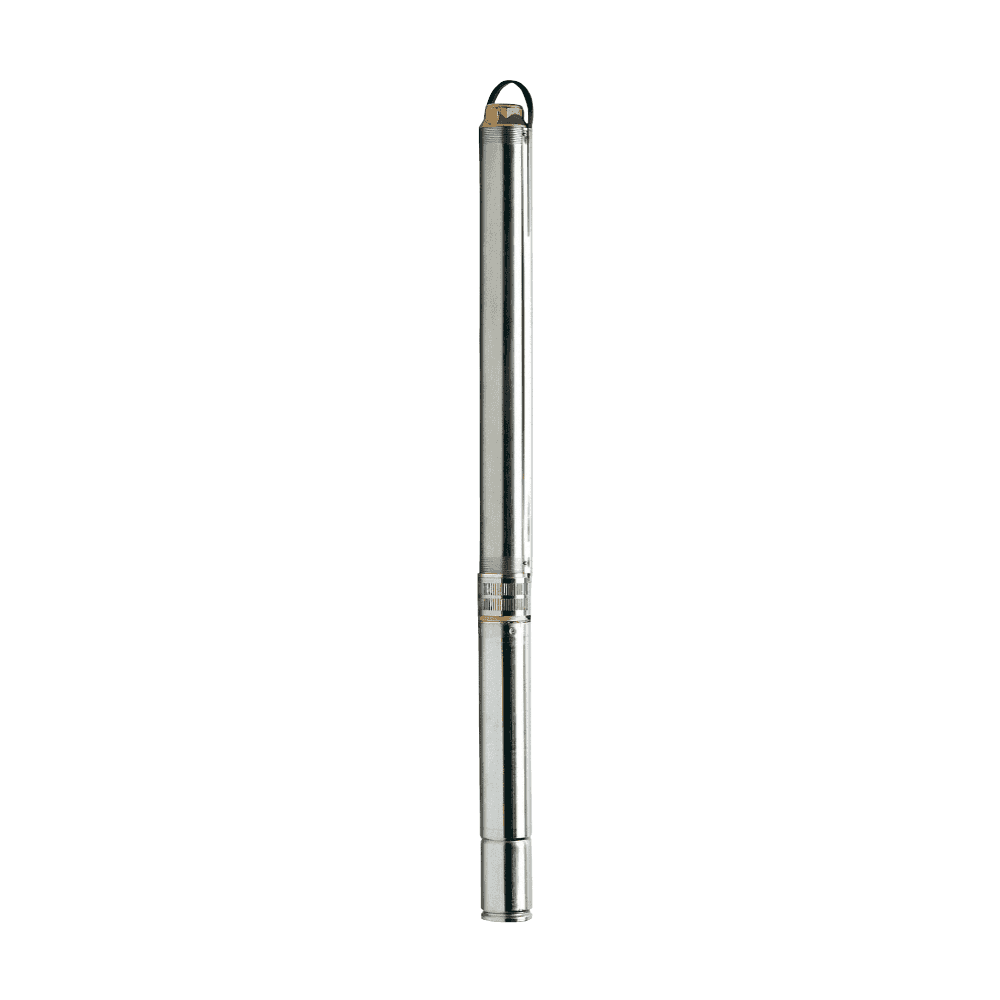
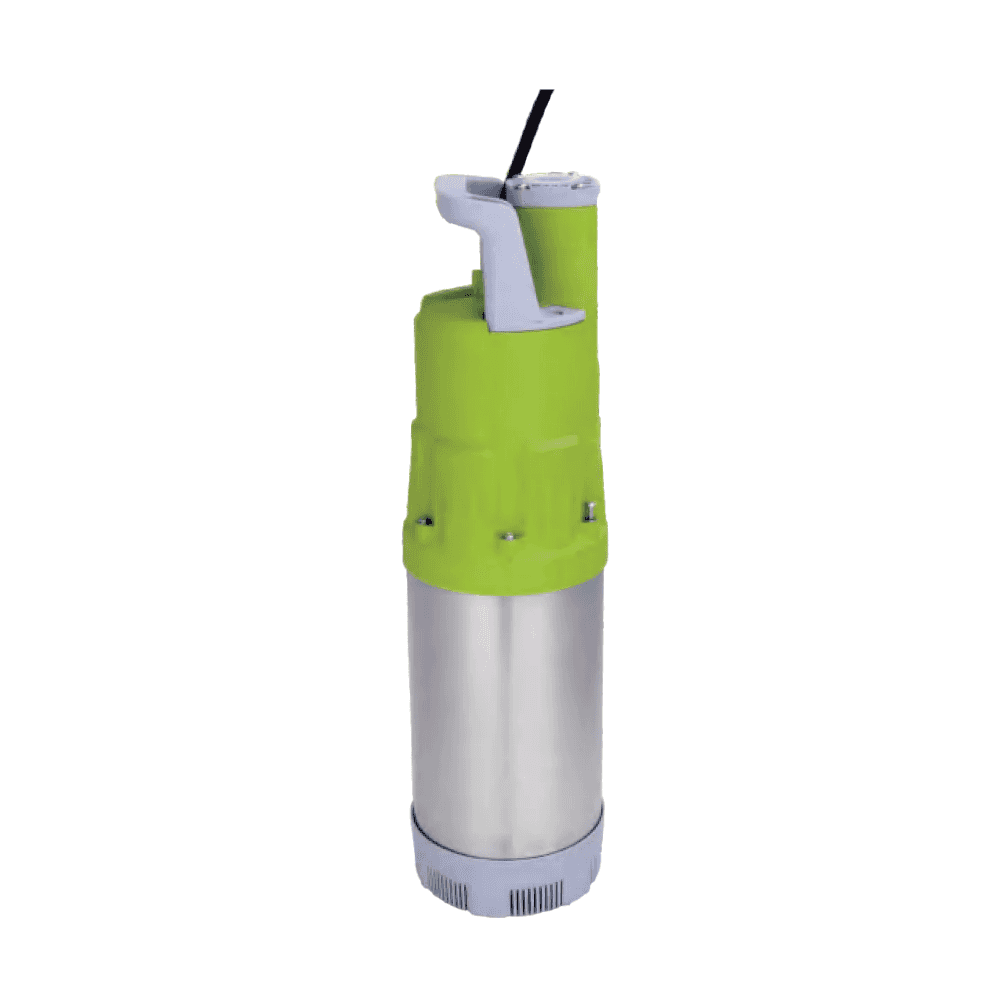
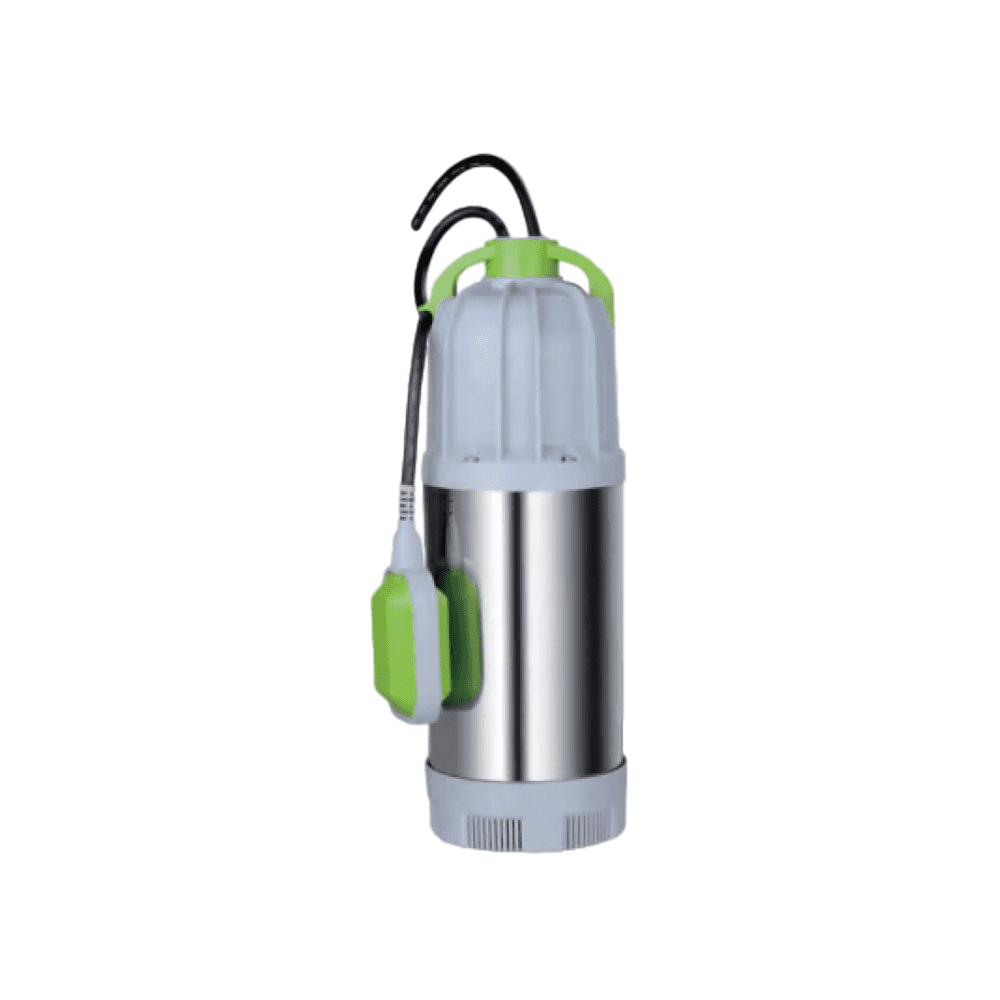
- Well and borehole pumps — submersible pumps for 3 inch, 4 inch, and 6 inch boreholes
- Pump controls and float switches — dry-run protection, pressure switches, and automation panels
Products by Category

Pentax 3S 3-30 3-Inch 230v Multistage Borehole Pump – 022-924
£636.31 +VATPentax 3S 3-45 3-Inch 230v Multistage Borehole Pump – 022-926
£704.62 +VATPentax 3S 3-Inch 230v Multistage Borehole Pumps
From £458.29
Well Buddy
From £133.30
Well Buddy 1000A
£133.30 +VATWell Buddy 1000P
£162.97 +VAT
Our team can help you select the right pump for your borehole depth, flow requirement, and application. Contact us for expert advice on borehole pump specification and sizing.
Frequently Asked Questions
What size borehole pump do I need for a commercial property?
The right size depends on your peak daily demand, borehole yield, and total dynamic head. As a starting point, a 4 inch submersible pump with a flow rate of 3–6 m³/h will serve most small to medium commercial properties. For larger sites, a full demand assessment — covering simultaneous peak use across all connected equipment and facilities — is essential before specifying. See the flow rate and head calculation section of this guide for the key variables.
Do I need a licence to install a borehole pump in the UK?
Not in all cases. Abstractions of 20 cubic metres (20,000 litres) or less per day are generally exempt from licensing in England and Wales. Above this threshold, an Environment Agency abstraction licence is required. If you’re unsure, contact the Environment Agency before proceeding — installing a pump without a required licence can result in enforcement action.
What is the difference between a 3 inch and 4 inch borehole pump?
The numbers refer to the nominal outer diameter of the pump body. A 3 inch pump (approximately 76mm OD) fits into narrower boreholes but has a lower maximum flow rate — typically up to 3 m³/h. A 4 inch pump (approximately 96mm OD) suits the most common borehole diameter in UK private water supplies and can deliver up to 13 m³/h depending on the model. Always confirm the actual borehole internal diameter before specifying a pump, as older boreholes may have reduced in diameter over time.
How deep can a submersible borehole pump operate?
This varies by model. Entry-level borehole pumps typically operate to depths of 60–80 metres. High-specification multi-stage submersible pumps can achieve total heads of 300 metres or more, suitable for deep aquifer extraction. The critical figure is total dynamic head (TDH), not simply depth — a pump set at 60 metres feeding a pressurised distribution system may need to develop 90+ metres of head when friction and delivery pressure are accounted for.
Can a borehole pump run continuously?
Yes, provided it is correctly sized for the borehole’s sustainable yield and fitted with appropriate dry-run protection. Continuous-duty rated pumps with stainless steel construction are designed for extended operation. However, running a pump faster than the aquifer recharges will eventually draw down the water level below the pump, triggering dry-run protection. A pump test during borehole commissioning establishes the safe continuous abstraction rate.
What maintenance does a borehole pump require?
Borehole pumps require relatively little routine maintenance compared to surface-mounted equipment. Annual inspections should include checking pump performance (flow and pressure against commissioning data), water quality testing, checking electrical connections and protection devices, and inspecting the borehole head and above-ground pipework. Full pump retrieval for inspection is typically recommended every 5–7 years, or sooner if performance declines.
How long does a borehole pump last?
A well-specified, correctly installed borehole pump operating within its design parameters can last 10–20 years or more. Premature failure is most commonly caused by: incorrect sizing (particularly oversizing leading to excessive cycling), dry running, aggressive water chemistry attacking non-stainless components, and inadequate protection against power surges. Investing in quality controls and protection equipment at the outset extends pump life considerably.
What controls do I need with a borehole pump?
At minimum: dry-run protection, a pressure vessel, and either a pressure switch (for direct supply applications) or a float switch (for header tank fill). For commercial installations, a dedicated pump control panel with thermal overload protection, soft-start capability, and remote monitoring significantly improves reliability and reduces the risk of unexpected failure. See our pump controls range for available options.
Key Takeaways
- Always start with borehole diameter, static water level, required flow rate, and total dynamic head — these four variables drive every other specification decision.
- Match pump flow rate to the sustainable yield of the borehole, not just your demand — exceeding yield will damage both pump and borehole.
- Abstractions above 20 cubic metres per day require an Environment Agency abstraction licence in England and Wales.
- Specify stainless steel construction for any application involving mineralised, hard, or iron-bearing groundwater.
- Invest in proper controls — dry-run protection and a correctly sized pressure vessel are not optional extras.
- Professional installation is essential for warranty validity, regulatory compliance, and long-term reliability.
- Conduct annual performance checks against commissioning data to catch deterioration before it becomes a failure.